Thursday, 5 July 2012

Bob Diamond Neuro Linguistic Programming


If anyone deserves a bonus: it's the artist who produced this cartoon. Apparently, it's going to take years and an estimated £60 millions, for an official British inquiry to arrive at the same, blindingly-obvious conclusion that there is a near-total absence of traditional morality amongst the 'Big Brothers' of the Banking fraternity.


http://www.bbc.co.uk/news/business-18717515
http://www.ibtimes.co.uk/articles/359568/20120704/bob-diamond-mps-barclays-libor-treasury-committee.htm


Yesterday, for three tedious hours, the former boss of Barclays Bank, Bob Diamond, gave a predictably-obstructive performance in front of the UK Treasury Select Committee. Perhaps the most revealing aspect of Mr. Diamond's appearance was how dry his mouth was (as demonstrated by the enormous quantify of water he kept drinking). 


Andrew Tyrie


With the exception of the Treasury Select Committee's chairman, Andrew Tyrie, Mr. Diamond even addressed its members using their first names, as though they were a group of old friends who were all on the same side. Yet, pretending affinity with potential victims, is a classic thought-stopping tactic used by charlatans and demagogues. It's also commonly-known as 'affinity fraud.'


In reality, Mr. Diamond attempted to influence his interrogators by employing various devious techniques of social and psychological persuasion; particularly  NLP (Neuro-Linguistic Programming). In plain English, Mr. Diamond showed his utter contempt for democracy and the rule of law, by constantly repeating certain reality-inverting words and phrases - maliciously chosen to try to convince the world that he has immense respect for democracy and the rule of law. In this way, Mr. Diamond successfully dodged giving direct answers to direct questions. Ironically, politicians often use these transparent techniques themselves. 


Unfortunately, in framing their questions, the members of the UK Finance Select Committee did not remember these two maxims:


'Follow the money;'


and:


'He who first cries out "Stop Thief!,' is often he who has stolen the treasure.'


Perhaps the ultimate question to have asked Mr. Diamond would have been:


In purely financial terms, who actually stood to gain the most from the 'reprehensible rate-fixing' fraud committed at Barclays Bank: yourself and other senior colleagues, or the approximately twenty subordinates whom you insist were solely responsible and who, consequently, you and your senior colleagues have held to account? 


 Although the narcissistic Mr. Diamond apparently still imagines that everyone (except him) is a child-like inferior whose critical, and evaluative, faculties can be shut-down by a labyrinth of corporate hocus-pocus combined with a tightly-scripted fairytale, any free-thinking person looking at the 'rate-fixing' scandal with common-sense, can immediately see that the bosses of Barclays have steadfastly pretended moral and intellectual authority whilst, at the same time, they have organized, and personally-profited-massively from, a systematic fraud designed to prevent, and/or divert, investigation and isolate them from liability. Self-evidently, it was the bosses of Barclays who selected a group of greedy subordinates and who placed them in a position where they were at liberty to manipulate the Libor and Euribor borrowing rates. Furthermore, Mr. Diamond and his associates offered these subordinates inducements to do exactly that, whilst turning a blind-eye. 


In the most simple terms, for several years, the likes of Mr. Diamond continued to pocket millions of dollars of 'bonuses' on profits which they knew to be partly-generated by a form of highly-organized crime, because they were the organizers. Indeed, the absolute proof that Mr. Diamond is a liar and racketeer, is his foolish claim that he knew absolutely nothing about the titanic, ongoing theft being shouted across the trading-floor of his bank day after day, but when he was finally informed very recently, he was amongst the first to cry: Stop Thief! That's, despite Mr. Diamond's additional claim to having been so initially 'shocked and angry' that he became 'physically-ill.' Personally, I have little doubt that Mr. Diamond went straight to the nearest toilet when he read the damning-report from the Financial Services Authority, but it must have been fear, rather than revulsion, which provoked his physical reaction.
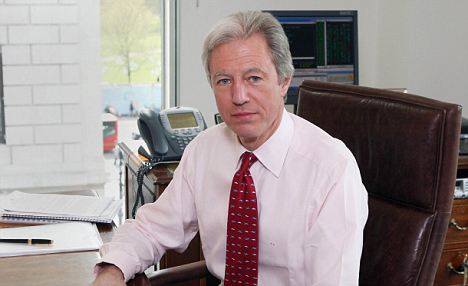


Curiously (the soon-to-be) ex-chairman of Barclays Bank, Marcus Agius, has already given a television interview during the course of which (in direct contradiction of Mr. Diamond's implausible, albeit tightly-scripted, fairytale) he let it slip that he knew all about the extensive rate-fixing at Barclays at least two years ago. Mr. Agius is due to appear before the UK Treasury Select Committee next week.   


David Brear (copyright 2012) 


Tuesday, 3 July 2012

Bob Diamond has resigned, but he has not called for the re-establishment of the rule of law

Between 1973 and 2006, at least one million UK and Irish citizens are known to have signed an annual contract with 'Amway UK Ltd' in which they were arbitrarily defined as 'Independent Business Owners.' In reality, the hidden, overall rolling churn/insolvency rate for the so-called 'Amway MLM business/income opportunity' in Britain, was effectively 100%. It has been estimated that, over a period of 34 years, the gang of billionaire, US-based racketeers behind 'Amway UK Ltd.' unlawfully generated around $1billion dollars by peddling their constantly-churning UK adherents countless, effectively-valueless publications, recordings, tickets to meetings, etc., on the fraudulent pretext that these 'optional materials contained exclusive secrets vital to achieving success within Amway.'   

'Amway UK' propaganda 2007

Several years ago, I was given verbal assurances by officers of the Company Investigation Branch of the UK government's Ministry for Business Enterprise and Regulatory Reform that, privately, they fully-accepted that 'Amway' was the corporate-front for two vast inter-related frauds, and that once 'Amway UK Ltd.' was closed down in the interests of the public (using technical, civil insolvency procedures) a rigorous criminal inquiry into the scandal lurking behind 'Amway' would be conducted by the UK Serious Fraud Office.

Is plea bargaining a realistic option for UK justice?
Peter Kiernan

During the UK government's low-level civil investigation and prosecution of  'Amway UK Ltd.,' the counterfeit 'direct selling' company was temporarily-represented by none other than the former deputy director of the UK SFO, Mr. Peter Kiernan. He, and other well-paid lawyers working for the firm of Eversheds LLP, actually tried (but failed) to persuade UK government officials to drop their civil prosecution.


In 2008, the UK government's public interest civil bankruptcy petition was declined by a UK High Court Judge, Mr. Justice Norris (on the demonstrably specious grounds that 'Amway's' attorneys had offered assurances that  the company's officers had been completely unaware that some of the company's senior 'distributors' had been lying for decades about the actual results of 'MLM', but, all the same, they had expelled the guilty parties and voluntarily reformed all previously-unlawful practices). This dangerous decision was then upheld (on appeal) by 2 out of 3 Appeal Court Judges. After first accepting a large quantity of information, agents of the UK SFO then refused to conduct any criminal investigation of 'MLM income opportunity' fraud in general and of 'Amway' in particular. However, due to bad publicity, the 'Amway' fraud has been effectively-halted in the UK. Its new main-feeding ground has become Asia. Currently (every 4 years), the 'Amway' fraud is churning around one million victims in India, where its apologists have claimed that the 'Amway MLM income opportunity' has been fully-investigated in the UK and given a clean bill of health by UK government regulators and by the UK courts.


In a series of stomach-churning events, strangely-reminiscent of those surrounding the UK authorities failure to investigate 'Amway UK Ltd', the 'Big Brother' of Barclays Bank, Bob Diamond, has now resigned. Predictably, he still steadfastly pretends moral and intellectual authority, but, no matter what reality-inverting script he recites, tellingly, it will not include a common-sense call for a rigorous, independent, criminal inquiry and the re-establishment of the rule of law in respect of all the 'Big Brothers' of the banking fraternity.


As most people already know, last week, regulators in the US and UK fined Barclays Bank more than $450 millions for its role in a conspiracy to rig 'Libor' and 'Euribor' (Libor is the variable key-interest-rate at which banks in London lend money to each other for the short-term in a particular currency. A new Libor rate is calculated each morning by financial data firm Thomson Reuters. It is based on interest rates provided by members of the British Bankers Association. Libor and Euribor directly affect the cost of hundreds of trillions of dollars of financial transactions internationally). 


Barclays' senior corporate officers (including Bob Diamond) have so-far admitted that a group of Barclays' traders lied for a number of years (prior to the current world economic crisis), in order to raise Libor and Euribor simply to make additional profits for Barclays and additional 'bonuses' for themselves, but then (when the economic crisis hit) these same traders lied to lower the key-inter-bank-borrowing-rates in order to hide Barclays' true position.
Whomsoever is investigating the Barclays scandal would do well to follow two well-known maxims: 'Follow the money;' and: 'He who first cries out "Stop Thief!," is often he who has stolen the treasure.' For it would be far more accurate to say that common-sense, supported by quantifiable evidence, strongly-suggests that the bosses of Barclays created, and personally-profited-massively from, a systematic fraud designed to prevent, and/or divert, investigation and isolate them from liability. Self-evidently, it was the bosses of Barclays who placed their subordinates in a position where they were at liberty to manipulate Libor and Euribor, and who offered these subordinates inducements to do exactly that, whilst they turned a blind-eye. In the most simple terms, the likes of Bob Diamond received millions of dollars of 'bonuses' on profits generated by a form of theft, but Bob is now amongst the first to shout 'stop thief!' 


Prime Minister David Cameron, who yesterday launched an inquiry into banking standards, has described these events as 'a scandal'. The UK Serious Fraud Office is only now considering whether to bring criminal charges.

There are many outraged people asking how is it possible that years after this vast fraud was perpetrated, senior UK law enforcement agents are still scratching their heads, wondering whether they should bother to make an attempt to investigate it, let alone hold those who profited the most from it, to account?  


There are hundreds of lawyers who staff the UK SFO, but it is very difficult to know what they do all day long (other than fantasising about getting a much-more-highly-paid job in the private sector defending companies like 'Amway' and 'Barclays Bank' ). Perhaps, it might be a very good idea for them to read the Fraud Act 2006?


David Brear (copyright 2012)


Monday, 2 July 2012

Barclays chairman resigns, but he has not called for the re-establishment of the rule of law


Sometimes it's difficult to know whether to laugh or cry. 
(Whilst reading the following article, remember that the latest titanic fraud to be revealed within the international banking system, occurred during the period 2005-2009 and that Mr. Marcus Agius joined the Barclays Bank board of directors in September 2006 and became chairman in January 2007 http://www.bbc.co.uk/news/uk-18668643).


__________________________________________________________________________________________ 


Until last week, the well-groomed and well-rehearsed 'Big Brothers' of the banking fraternity have continued to pretend moral and intellectual authority. At the same time, they have gone to the most-extraordinary lengths (including spreading a rumour that they can't be prosecuted) to protect themselves from being held to account, but, tellingly, they have done effectively-nothing to remove highly-profitable loopholes (for them) from their suspiciously-flawed system. All of a sudden (only when faced with the looming-possibility of criminal prosecution and public disgrace), Bank bosses can't do enough to protect the public. Barclays Bank now says it will establish a 'Zero Tolerance Policy' to anything that 'damages the bank's reputation. One can almost smell the stale sweat of 'crisis management consultants' hard at work thumbing through their thought-stopping phrase-book.
Bob Diamond                                             Marcus Agius

Over the weekend, the Chairman of Barclays Bank PLC, Marcus Agius, has announced he will resign due to the key-inter-bank interest-rate-fixing fraud.
Obviously, Mr Agius has not called for the re-establishment of the rule of law, even though he has said:
 'I am truly sorry... the buck stops with me.'
Unfortunately, the stolen Barclays bucks didn't stop with Mr. Agius, because millions of them wound up in the bulging pockets of his greedy little colleagues, like Bob Diamond.
Last week Barclays was fined more than $450m for making unlawful profits out of manipulating the 'London Inter Bank Offered Rate (LIBOR).' However, it is Barclays customers who, in the long run, will have to pay this staggering fine.
As yet, no one at Barclays has been arrested. Initially, Bob Diamond will answer to the House of Commons Treasury Select Committee on Wednesday, Mr Agius, next week.
Sir Michael Rake
Sir John Sunderland
So far, Mr. Diamond has arrogantly-refused to resign as Barclays CEO, whilst Mr. Agius will temporarily remain as chairman. However, the somewhat ironically- named Sir Michael Rake (chairman of British Telecom and senior independent director at Barclays), has become deputy chairman of Barclays. Sir John Sunderland (a non-executive director of Barclays) will launch the hunt for Mr. Agius' successor today.

Paul Tucker
Mr. Diamond has apparently claimed that a telephone conversation he had with the Deputy Governor of the Bank of England, Mr. Paul Tucker, in 2008, was relayed to Mr. Jerry del Missier (Barclays' Chief operating officer) in the form of a memo which was then interpreted as a government instruction (via the Bank of England) to lie about the inter-bank borrowing rate (i.e. commit fraud). http://www.bbc.co.uk/news/business-18665080. Conveniently, no recording was made of this conversation; only Mr. Diamond's internal memo survives. The official Barclay's version of these key-events has been posted on the company's Website: http://group.barclays.com/Satellite?blobcol=urldata&blobheader=application%2Fpdf&blobheadername1=Content-Disposition&blobheadername2=MDT-Type&blobheadervalue1=inline%3B+filename%3D3-July---Treasury-Select-Committee%3A-Written-submission.pdf&blobheadervalue2=abinary%3B+charset%3DUTF-8&blobkey=id&blobtable=MungoBlobs&blobwhere=1330686940546&ssbinary=trueBarclays' board has announced an 'audit of its business practices,' to be conducted by an 'independent body' (presumably not the Serious Fraud Office) which will report to Sir Michael Rake.
The bank has promised a 'root and branch review' of its 'flawed past practices,' a public report and a 'new mandatory code of conduct for all staff.'
In theory (but evidently not in practice), there are already mandatory codes of conduct for everyone (including bankers) in Britain and the USA; these are known as 'The Theft Act 1968 (amended 2006)', 'The Fraud Act 2006' and 'The US Federal Racketeer Influenced and Corrupt Organizations Act 1970.'


David Brear (copyright 2012)


______________________________________________________________________________________________


'The Fraud Act 2006 gives a statutory definition of the criminal offence of fraud, defining it in three classes - fraud by false representation, fraud by failing to disclose information, and fraud by abuse of position. It provides that a person found guilty of fraud is liable to a fine or imprisonment for up to twelve months on summary conviction (six months in Northern Ireland), or a fine or imprisonment for up to ten years on conviction on indictment. This Act largely replaces the laws relating to obtaining property by deception, obtaining a pecuniary advantage and other offences that were created under the Theft Act 1978. These offences attracted much criticism for their complexity and difficulty in proving at court. Much of the Theft Act 1978 has been repealed, however, the offence of making off without payment, defined under section 3 has not been affected.
"Fraud by false representation" is defined by Section 2 of the Act as a case where a person makes "any representation as to fact or law ... express or implied" which they know to be untrue or misleading.
"Fraud by failing to disclose information" is defined by Section 3 of the Act as a case where a person fails to disclose any information to a third party when they are under a legal duty to disclose such information.
"Fraud by abuse of position" is defined by Section 4 of the Act as a case where a person occupies a position where they are expected to safeguard the financial interests of another person, and abuses that position; this includes cases where the abuse consisted of an omission rather than an overt act.
In all three classes of fraud, it requires that for an offence to have occurred, the person must have acted dishonestly, and that they had to have acted with the intent of making a gain for themselves or anyone else, or inflicting a loss (or a risk of loss) on another.'


The following is taken from 'Black's Law Dictionary,' page 1286 (8th ed. 2005).

In 1970, the (US federal) RICO Act was passed with the purpose of attacking organized criminal activity and preserving marketplace integrity by investigating, controlling, and prosecuting persons who participate or conspire to participate in racketeering.

Racketeering has two pertinent definitions. First, racketeering may be “a system of organized crime traditionally involving the extortion of money from businesses by intimidation, violence, or other illegal methods." Id. Additionally, 18 U.S.C. §§ 1961 et seq., defines racketeering as a "pattern of illegal activity (such as bribery, extortion, fraud, and murder) carried out as part of an enterprise (such as a crime syndicate) that is owned or controlled by those engaged in the illegal activity." Id. at 1287; see also 18 U.S.C. § 1961(1) (2005). This second definition has expanded the legal conception of racketeering to contain additional crimes, including the collection of illicit gambling debts, securities fraud, and mail fraud. Id. The RICO Act is open to broad interpretation, so it may be employed in a manner unintended by Congress. In one case, the U.S. Attorney stated that a perpetrator who attacked an abortion clinic could be charged under the RICO statutes if he acted as part of an organization. Joseph Berger, Prosecutors to Present Clinic Doctor's Slaying to Grand Jury,N.Y. TIMES (Apr. 20, 1999) at B5. Commenting on a civil lawsuit brought against an anti-abortion group, one Florida Representative said, "It was never the intention that the law be used against advocacy groups." SeeClinic bomb victim speaks against bill to curb RICO, FORT WORTH STAR-TELEGRAM Jul 18, 1998 at 7. The RICO statutes can be applied in both criminal and civil cases, for a plaintiff can file a suit against a defendant for treble damages. id. at 1286. Consequently, both prosecutors and plaintiffs have reason to claim that many actions are punishable under the RICO statutes.

The Crime

18 U.S.C. § 1962 (2005).
Under this section, there are three different crimes that can be committed, plus an additional conspiracy provision.

Under section 1962(a), it is a crime for any person who has received any income derived from a pattern of racketeering activity or through collection of an unlawful debt in which such person has participated as a principal, to

  • use or invest, directly or indirectly, any part of such income, or the proceeds of such income,
    • in acquisition of any interest in, or the establishment or operation of, any enterprise which is engaged in, or the activities of which affect, interstate or foreign commerce. 18 U.S.C. § 1961(a).
Under section 1962(b), it is a crime for a person, through a pattern of racketeering activity or through collection of an unlawful debt,
  • to acquire or maintain, directly or indirectly, any interest in or control of any enterprise which is engaged in, or the activities of which affect, interstate or foreign commerce. Id. § 1962(b)
Under section 1962(c), it is a crime for a person employed by or associated with any enterprise engaged in, or the activities of which affect, interstate or foreign commerce, to
  • conduct or participate, directly or indirectly, in the conduct of such enterprise's affairs through a pattern of racketeering activity or collection of unlawful debt. Id. § 1962(c)
Under section 1962(d), it is a crime for any person to conspire to violate any of the provisions of section 1962. Id. § 1962(d).
Exception
Section 1962(a) generally does not apply to a purchase of securities on the open market for purposes of investment, and without the intention of controlling or participating in the control of the issuer, if the securities of the issuer held do not amount in the aggregate to one percent of the outstanding securities of any one class, and do not confer, either in law or in fact, the power to elect one or more directors of the issuer.) 18 U.S.C. § 1962(a).

The Punishment

18 U.S.C. § 1963 (2005).
A violation of section 1962 can be punished by

  • a fine,
  • imprisonment for not more than 20 years, or
  • both. 18 U.S.C. § 1963(a).
If the violation is based on a racketeering activity for which the maximum penalty includes life imprisonment, then the violation can be punished by
  • a fine,
  • imprisonment for up to life, or
      both. Id.
    Furthermore, the violation will result in the forfeiture to the United States of
    • any interest the person has acquired or maintained in violation of section 1962. 18 U.S.C. § 1963(a)(1).
    • any-
      • interest in any enterprise which the person has established, operated, controlled, conducted, or participated in the conduct of, in violation of section 1962; id. § 1963(a)(2)(A);
      • security of any enterprise which the person has established, operated, controlled, conducted, or participated in the conduct of, in violation of section 1962; id. § 1963(a)(2)(B);
      • claim against any enterprise which the person has established, operated, controlled, conducted, or participated in the conduct of, in violation of section 1962; id. § 1963(a)(2)(C); or
      • property or contractual right of any kind affording a source of influence over any enterprise which the person has established, operated, controlled, conducted, or participated in the conduct of, in violation of section 1962; id. § 1963(a)(2)(D); and
    • any property constituting, or derived from, any proceeds which the person obtained, directly or indirectly, from racketeering activity or unlawful debt collection in violation of section 1962. 18 U.S.C. § 1963(a)(3)
    Furthermore, in lieu of a fine otherwise authorized by this section, a defendant who derives profits or other proceeds from an offense may be fined not more than twice the gross profits or other proceeds. 18 U.S.C. § 1963(a).
    The remaining provisions of section 1963 concern forfeiture procedures.

Definitions

18 U.S.C. § 1961 (2005).
Section 1961 contains a long list of definitions of what constitutes racketeering. As used in the RICO statutes,

  • "racketeering activity" means
    • any act or threat involving
      • murder,
      • kidnapping,
      • gambling,
      • arson,
      • robbery,
      • bribery,
      • extortion,
      • dealing in obscene matter, or
      • dealing in a controlled substance or listed chemical,
      which is chargeable under State law and punishable by imprisonment for more than one year; 18 U.S.C. § 1961(1)(A).
    • any act which is indictable under any of the following provisions of title 18, United States Code:
      • Section 201 (relating to bribery),
      • section 224 (relating to sports bribery),
      • sections 471, 472, and 473 (relating to counterfeiting),
      • section 659 (relating to theft from interstate shipment) if the act indictable under section 659 is felonious,
      • section 664 (relating to embezzlement from pension and welfare funds),
      • sections 891-894 (relating to extortionate credit transactions),
      • section 1028 (relating to fraud and related activity in connection with identification documents),
      • section 1029 (relating to fraud and related activity in connection with access devices),
      • section 1084 (relating to the transmission of gambling information),
      • section 1341 (relating to mail fraud),
      • section 1343 (relating to wire fraud),
      • section 1344 (relating to financial institution fraud),
      • section 1425 (relating to the procurement of citizenship or nationalization unlawfully),
      • section 1426 (relating to the reproduction of naturalization or citizenship papers),
      • section 1427 (relating to the sale of naturalization or citizenship papers),
      • sections 1461-1465 (relating to obscene matter),
      • section 1503 (relating to obstruction of justice),
      • section 1510 (relating to obstruction of criminal investigations),
      • section 1511 (relating to the obstruction of State or local law enforcement),
      • section 1512 (relating to tampering with a witness, victim, or an informant),
      • section 1513 (relating to retaliating against a witness, victim, or an informant),
      • section 1542 (relating to false statement in application and use of passport),
      • section 1543 (relating to forgery or false use of passport),
      • section 1544 (relating to misuse of passport),
      • section 1546 (relating to fraud and misuse of visas, permits, and other documents),
      • sections 1581-1591 (relating to peonage, slavery, and trafficking in persons),
      • section 1951 (relating to interference with commerce, robbery, or extortion),
      • section 1952 (relating to racketeering),
      • section 1953 (relating to interstate transportation of wagering paraphernalia),
      • section 1954 (relating to unlawful welfare fund payments),
      • section 1955 (relating to the prohibition of illegal gambling businesses),
      • section 1956 (relating to the laundering of monetary instruments),
      • section 1957 (relating to engaging in monetary transactions in property derived from specified unlawful activity),
      • section 1958 (relating to use of interstate commerce facilities in the commission of murder-for-hire),
      • sections 2251, 2251A, 2252, and 2260 (relating to sexual exploitation of children),
      • sections 2312 and 2313 (relating to interstate transportation of stolen motor vehicles),
      • sections 2314 and 2315 (relating to interstate transportation of stolen property),
      • section 2318 (relating to trafficking in counterfeit labels for phonorecords, computer programs or computer program documentation or packaging and copies of motion pictures or other audiovisual works),
      • section 2319 (relating to criminal infringement of a copyright),
      • section 2319A (relating to unauthorized fixation of and trafficking in sound recordings and music videos of live musical performances),
      • section 2320 (relating to trafficking in goods or services bearing counterfeit marks),
      • section 2321 (relating to trafficking in certain motor vehicles or motor vehicle parts),
      • sections 2341-2346 (relating to trafficking in contraband cigarettes),
      • sections 2421-2424 (relating to white slave traffic),
      • sections 175-178 (relating to biological weapons),
      • sections 229-229F (relating to chemical weapons),
      • section 831 (relating to nuclear materials). Id. § 1961(1)(B).
    • an act which is indictable under title 29 U.S.C. § 186 (dealing with restrictions on payments and loans to labor organizations) or 18 U.S.C. § 501(c) (relating to embezzlement from union funds). Id. § 1961(1)(C).
    • any offense involving fraud connected with
      • a case under title 11 (except a case under 18 U.S.C. § 157),
      • fraud in the sale of securities, or
      • the felonious manufacture, importation, receiving, concealment, buying, selling, or otherwise dealing in a controlled substance or listed chemical, punishable under any law of the United States. Id. § 1961(1)(D).
    • any act which is indictable under the Currency and Foreign Transactions Reporting Act. Id. § 1961(1)(E)
    • any act which is indictable under the Immigration and Nationality Act,
      • 8 U.S.C. § 1324 (relating to bringing in and harboring certain aliens),
      • 8 U.S.C. § 1327 (relating to aiding or assisting certain aliens to enter the United States),
      • 8 U.S.C. § 1328 (relating to importation of alien for immoral purpose)
      if the act indictable under such section of such Act was committed for the purpose of financial gain. Id. § 1961(1)(F).
    • any act that is indictable under any provision listed in 18 U.S.C. § 2332b(g)(5)(B). Id. § 1961(1)(G)
  • "enterprise" includes any individual, partnership, corporation, association, or other legal entity, and any union or group of individuals associated in fact although not a legal entity. 18 U.S.C. § 1961(4).
  • "pattern of racketeering activity" requires at least two acts of racketeering activity, one of which occurred after the effective date of this chapter and the last of which occurred within ten years (excluding any period of imprisonment) after the commission of a prior act of racketeering activity. 18 U.S.C. § 1961(5).
  • "unlawful debt" means a debt
    • incurred or contracted in gambling activity which was in violation of the law of the United States, a State or political subdivision thereof, or which is unenforceable under State or Federal law in whole or in part as to principal or interest because of the laws relating to usury, 18 U.S.C. § 1961(6)(A) and
    • which was incurred in connection with the business of gambling in violation of the law of the United States, a State or political subdivision thereof, or the business of lending money or a thing of value at a rate usurious under State or Federal law, where the usurious rate is at least twice the enforceable rate. Id. § 1961(6)(B).
  • "racketeering investigator" means any attorney or investigator so designated by the Attorney General and charged with the duty of enforcing or carrying into effect this chapter. 18 U.S.C. § 1961(7).
  • "racketeering investigation" means any inquiry conducted by any racketeering investigator for the purpose of ascertaining whether any person has been involved in any violation of this chapter or of any final order, judgment, or decree of any court of the United States, duly entered in any case or proceeding arising under this chapter [18 USCS §§ 1961 et seq.]. 18 U.S.C. § 1961(8).

Case Law Interpreting the RICO Act

As can be clearly seen from section 1961, the list of affiliated activities is quite large and many organizations and individuals can easily find themselves subject to the stiff penalties and sanctions afforded under RICO. As a preliminary matter, it should be noted that, while the Act refers to "Criminal Organizations," membership in organized crime is not a necessary element of a RICO conviction. United States v. Uni Oil, Inc. 646 F.2d 946, 953 (5th Cir. 1981).
In order to secure a conviction under the RICO Act, the government must prove both the existence of an "enterprise," and a connected "pattern of racketeering activity." United States v. Turkette, 452 U.S. 576, 583 (1981). An enterprise is an entity, and it can be proved by evidence of an ongoing organization, and by evidence that the carious associates function as a continuing unit. Id. The pattern of racketeering activity is a series of criminal acts, which can be proved by evidence of the requisite number of acts of racketeering committed by the participants in the enterprise. Id. Proof of one, however, does not necessarily prove the other. Id. Furthermore. Racketeering enterprises or racketeering predicate acts do not need to be accompanied by an underlying economic motive. NOW v. Scheidler, 510 U.S. 249, 259, 261 (1994).
To clarify how each of the three subsections of section 1962 operate, the case Kehr Packages v. Fidelcor, Inc., 926 F.2d 1406 (3rd Cir. 1991) is informative. Under section 1962(a), the plaintiff (or government) must allege an injury specifically from the use or investment of income in the named enterprise; under section 1962(b) the plaintiff (or government) must allege a specific nexus between control of a named enterprise and the alleged racketeering activity; and while section 1962(c) is not subject to these nexus limitations, cases brought under section 1962(c) cannot allege that an entity is both an enterprise and a defendant. Kehr at 1411.
In establishing a pattern of racketeering activity, the prosecutor must show that racketeering predicates are related and that they amount to or pose a threat of continued criminal activity. H.J., Inc. v. Northwestern Bell Tel, Co. 492 U.S. 229, 240 (1989). This may be done in a variety of ways. Id. at 241. "A party alleging a RICO violation may demonstrate continuity over a closed period by proving a series of related predicates extending over a substantial period of time. Predicate acts extending over a few week or months and threatening no future criminal conduct do not satisfy this requirement." Id. at 242. Congress, apparently, "was concerned in RICO with longterm criminal conduct." Id. If continuity cannot be established by showing longterm activity, "liability depends on whether the threat of continuity is demonstrated." Id. (emph. in original). Because "threat of continuity" depends on the specific facts of each case, it can be sufficiently established "where the predicates can be attributed to a defendant operating as part of a long-term association that exists for criminal purposes." Id. at 242-43. The continuity requirement can also be satisfied by showing "that the predicates are a regular way of conducting defendant's ongoing legitimate business (in the sense that it is not a business that exists for criminal purposes), or of conducting or participating in an ongoing and legitimate RICO 'enterprise.'" Id. at 243.
Defining an "enterprise" is therefore important. An enterprise can technically exist with only one actor to conduct it, even though it will, in most situations, be conducted by more than one person or entity. Salinas v. United States, 522 U.S. 52, 65 (1997) (dicta). The existence of a RICO enterprise is shown where
  1. there is an ongoing organization with a decision-making framework for controlling a group that remains unchanged over time
  2. various associates function as continuing unit, and
  3. enterprise is separate and apart from the pattern of racketeering activity. United States v. Sanders, 928 F.2d 940, 943 (10th Cir. 1991).