Thursday, 11 January 2018

New York Times begins to investigate 'MLM' racketeering in China.

Image result for pseudoscience


Statutory Warning

More than half a century of quantifiable evidence, proves beyond all reasonable doubt that:
  • what has become popularly-known as 'Multi-Level Marketing' (aka 'Network Marketing') is nothing more than an absurd, cultic, economic pseudo-science.
  • the impressive-sounding made-up term 'MLM,' is, therefore, part of an extensive, thought-stopping, non-traditional jargon which has been developed, and constantly-repeated, by the instigators, and associates, of various, copy-cat, major, and minor, ongoing organised crime groups (hiding behind labyrinths of legally-registered corporate structures) to shut-down the critical, and evaluative, faculties of victims, and of casual observers, in order to perpetrate, and dissimulate, a series of blame-the-victim rigged-market swindles or pyramid scams (dressed up as 'legitimate direct selling income opportunites'), and related advance-fee frauds (dressed up as 'legitimate training and motivation, self-betterment, programs, recruitment leads, lead generation systems,' etc.).
  • Apart from an insignificant minority of exemplary shills who pretend that anyone can achieve success, the hidden overall loss/churn rate for participation in so-called 'MLM income opportunities,' has always  been effectively 100%

David Brear (copyright 2018)


______________________________________________________________________________


Photo

A display promoting a water purifier at Amway’s “experience center” in Beijing. Amway said it welcomed China’s crackdown on multilevel marketing as a way to distinguish pyramid schemes from legitimate direct selling. CreditLi Wei for The New York Times

LANZHOU, China — Feng Gang stood in front of 150 people in a conference hall in Beijing that Amway, the American marketing giant, calls its flagship “experience center.”
Introduced endearingly as Big Brother, he pitched the company’s newest product to an audience of recruits — men and women, young and old, one a street sweeper still in his orange municipal jumpsuit.
Mr. Feng said Amway’s energy drink, XS, could reduce blood-alcohol levels by as much as 70 percent. It could cure depression, he went on, or help someone who is drunk drive home. His aim: to get the crowd to go out and sell the products.
For more than a decade, scenes like this represented a financial salvation for Amway and other companies that use sales representatives to recruit others below them in what’s called multilevel marketing.
Facing declining fortunes in the United States and elsewhere, they turned to a ballooning consumer class in China hungry for new products — and susceptible to promises of the riches to be had by selling them.
Now, the future seems less promising. The giants of multilevel marketing have come under a dual assault, from regulators here and in the United States.


Photo

An Amway presentation in Beijing. Direct selling has been legal in China since 2005, with restrictions that have been unevenly enforced. CreditLi Wei for The New York Times

Two companies, Herbalife and Usana Health Sciences, disclosed last year that they faced investigations in the United States for their operations in China under the Foreign Corrupt Practices Act, which prohibits American companies from bribing foreign officials. Another, Nu Skin, settled a similar case with the Securities and Exchange Commission in 2016, while Avon Products pleaded guilty in 2014, resulting in a $135 million fine.
Amway, which is not public, has not disclosed any inquiries by American regulators. In one Chinese province, however, the conduct of some Amway sales distributors prompted an investigation, one that the victims say was squelched by local officials, including at least one with ties to the company.
“This industry is absolute chaos for China,” said You Yunfan, a former Amway distributor who wrote a scathing memoir under the pen name Xiao Fei.
Noting that Chinese law prohibits many of the worst practices associated with multilevel marketing, he added, “The root problem is that the government is riddled with corruption and not doing its job.”
That may be changing. Four government agencies last year announced a crackdown on the marketing model, which critics denounce as a pyramid scheme.
Turbulence in the Chinese market could be devastating for Amway, which has relied on China for much of its growth over the last decade.
It is now, by far, the largest of the multilevel marketing companies here, with 1.5 million distributors, more than all the others combined, according to the Ministry of Commerce’s records. China is now Amway’s largest market, accounting for $2.6 billion in revenue, or about 30 percent of its worldwide sales, the company’s president, Doug DeVos, told Reuters last year.


Photo

The Beijing experience center. China accounts for about 30 percent of Amway’s worldwide sales, the company’s president said last year. CreditLi Wei for The New York Times

In a statement, an Amway vice president, Scott Balfour, said the company welcomed the crackdown, saying it would distinguish pyramid schemes from legitimate direct selling.
Amway has not been singled out in the campaign, and it has built an impressive brand here, operating gleaming showrooms in Beijing and elsewhere and sponsoring the Chinese Olympic team. Yet it has been dogged by accusations like those it has faced elsewhere.
Former Amway distributors have organized online to warn others of the company’s model. Amway’s name in Chinese, an li, has entered the vernacular to mean to “promote heavily” or to “be brainwashed.”
Amway and others faced skepticism from the authorities nearly from the moment they entered the market in the early 1990s. Multilevel marketing was officially denounced as an “economic cult,” and in 1998 the government banned all direct selling.
Only when negotiating entry into the World Trade Organization did China agree to American demands to allow the companies in. Direct selling has been legal since 2005, though with restrictions intended to discourage the endless recruiting of new distributors, a component of Amway’s model.
Enforcement of the laws, however, remains uneven. “It’s a gray area,” said Liu Kaixiang, a professor at Peking University’s School of Law who conducts research at the university’s industry-affiliated direct-selling research center. “The majority of these direct-selling companies are right on the edge. If they were to completely follow the law, there would be no market at all.”
The vagaries of Chinese regulations and an avaricious bureaucracy have already ensnared others, like Avon, once the top direct seller here. In 2014, it admitted to providing $8 million in cash and gifts like Gucci purses to Chinese officials.


Photo

Another scene inside the center. Amway has not been singled out for scrutiny. CreditLi Wei for The New York Times

Similar troubles caught up with Nu Skin, which settled a case by the Securities and Exchange Commission in 2016 by admitting that it paid the equivalent of $154,000 to “a charity to obtain the influence of a high-ranking Chinese Communist Party official” to resolve a potential fine.
Herbalife disclosed in a stock filing that it, too, was under investigation, while Usana Health Sciences announced that it had alerted the Department of Justice about questions over “expense reimbursement policies” of its subsidiary in China.
Amway said in its statement that it had not faced questions from American regulators about its practices in China. Its business has nonetheless raised questions.
In Amway’s Beijing center, a reporter with The New York Times listened as Big Brother Feng detailed sales tactics that would violate Chinese law if used, promising that new recruits could earn more as they recruited others.
A few days later, one of the recruits was out on the streets repeating the pitch as he handed out fliers for the XS energy drink. The fliers said new distributors could ultimately earn the equivalent of $75,000 a year.
In fact, 96 percent of direct sellers make less than $750 a year, roughly the average monthly wage for private-sector workers, according to government statistics.
In some regions, Amway in particular has come under focus.
In Lanzhou, a city of nearly 3.7 million along the Yellow River and the ancient Silk Road in Gansu Province, dozens of former distributors have accused the company of abetting extortionate practices that left them in debt. They accused those above them of conning them into buying products they could not realistically sell.
One of them, Liu Gang, said he had been persuaded to give up a job as a teacher in 2009 to pursue an Amway fortune.


Photo

XS is an Amway energy drink. Some former distributors in China have complained that they were duped into buying products they could not realistically sell. CreditLi Wei for The New York Times

In training sessions, some of which he recorded and played for The Times, he was told that the way to achieve success was by working under pressure. He took out loans — first mortgaging his home, then borrowing from unofficial lenders working, he and others said, with the local Amway staff — to load up on vitamins, water filters and soaps. By 2014, he could not unload his merchandise and faced $600,000 in debt.
“I was brainwashed,” Mr. Liu said.
The provincial office of the State Administration for Industry and Commerce, which regulates businesses, took the accusations seriously. In May 2016, the office sent a letter to complainants saying that there was evidence of wrongdoing and that the region’s top two distributors, a husband-and-wife team, Tang Jinsong and Zhao Yufang, “are suspected of operating a pyramid scheme.”
“To climb to the top, you need a team of distributors under you,” said Liu Jianhong, another former distributor, who provided the letter to The Times. “It forms a pyramid. We were at the very bottom.”
Mr. Balfour, the Amway vice president, said that the Lanzhou situation had “involved a number of serious violations of our rules of conduct, as well as violations of Chinese lending laws” by sales distributors, but that the company itself had not been accused of wrongdoing.
In a second statement, Amway said that it did not endorse exaggerated claims of distributors and that company policy prohibited obtaining loans to buy products. Mr. Balfour said the company would investigate specific claims brought to its attention.
The regulatory office in Lanzhou gave enough credence to the complaints that it referred the findings to the local branch of China’s main law enforcement agency, the Public Security Bureau.
Then the investigation stalled.
Wang Xingwei, the administration official in charge of the initial investigation, said in a telephone interview that he had been transferred off the case.
The former distributors said they believed that regional officials sympathetic to Amway had quashed their complaints. They cited an instance when the state television channel in Gansu, after interviewing them, received a directive not to report on their case.
According to a journalist at the station, Gao Zenglei, the directive came from the Communist Party’s provincial propaganda department. At the time, it was headed by Liang Yanshun, who once participated in an Amway program that enrolled officials in classes at Tsinghua University and Harvard University, according to Harvard and his online biography. Mr. Liang did not respond to requests for comment.


Photo

An image at the center featuring Amway’s founders, Richard M. DeVos Sr., left, and Jay Van Andel.CreditLi Wei for The New York Times

Ms. Zhao, one of the top distributors, dismissed the accusations and said she and her husband, Mr. Tang, had done everything “entirely in accordance with the company’s system, according to the company’s operating model and under the oversight of the company.”
The aggrieved distributors, she added, were responsible for any debts they built up.
“Everyone should be responsible for their own actions,” she said. “If they don’t know this, they won’t last in this world.”
Mr. Balfour said Amway had punished individuals involved, though he did not disclose names or sanctions. Amway’s website still counts Mr. Tang and Ms. Zhao as among its top handful of sales distributors, and their photo is on display at Amway’s big Beijing conference hall.
The former distributors, by contrast, face financial ruin.
Liu Jianhong amassed $300,000 in debt. In China, that means she has been put on a government list that prohibits her from flying, taking trains or acquiring new credit cards.
“I’m going to be dealing with this the rest of my life,” she said.

Ryan McMorrow 
Stevn Lee Myers
New York Times (copyright 2018)


__________________________________________________

The above  'New York Times' article contained interviews with chronic Chinese victims of the pernicious 'MLM' fairy story - one of whom has lost over $500 000 and who described himself as 'brainwashed.' The article also explained how various US-based 'MLM' companies face investigation, or have already been caught and heavily-fined, for paying bribes in China.

Even though 'MLM'  groups were once officially identified as 'evil cults and secret societies spreading superstition and lawless activities' and 'MLM' remains supposedly banned in China, the 'NY Times' article began to set out some of the subversive tactics which have been widely-employed by the bosses of various US-based 'MLM' cultic rackets in order to keep operating China. 

www.bloomberg.com/news/articles/2013-09-24/amway-embraces-china-using-harvard-guanxi

This information came as a complete surprise to one of my correspondents who wants to know how it is possible that such a controversial organisation as 'Amway' could simply buy association with Harvard University in order to gain influence over Chinese officials? 

http://www.slate.com/articles/business/moneybox/2017/02/the_trump_era_will_be_a_boon_for_multilevel_marketing_companies.html

Yet these serious matters were touched on in a 'Slate Magazine' article (by Michelle Celarier) in February 2017, whilst  in September 2013, a much more detailed description of 'Amway/Nutrilite's' campaign of subversion in China appeared in an issue of 'Bloomberg Markets' and was partly republished in October 2013 in the 'Washington Post.'
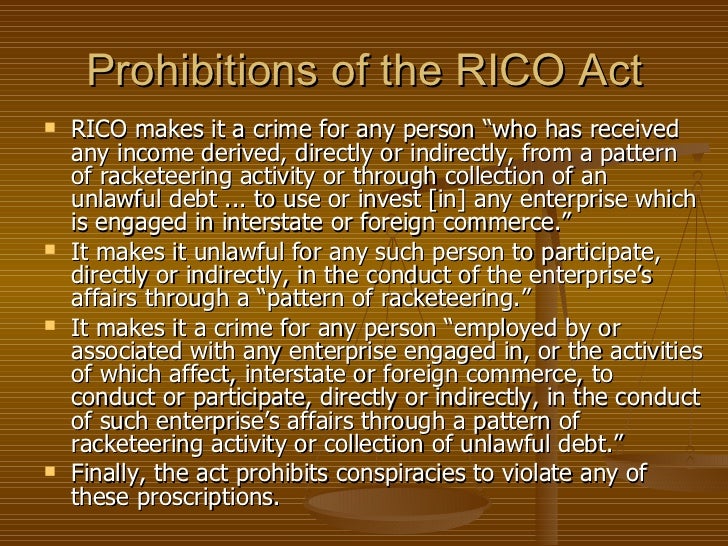
Image result for rico act

Unfortunately, the mainstream media has treated 'MLM' as a business story, when nothing could be further from truth. Indeed, every move in China described by 'Bloomberg' and the 'Washington Post' in 2013 and lately confirmed by the 'NY Times,' fits into an overall pattern of ongoing major racketeering activity (as defined by the US federal Racketeer Influenced and Corrupt Organisations Act, 1970).

_________________________________________________________________________

Amway thrives in China, with Harvard’s help


Anthony Saich enlisted Amway to sponsor a program for Chinese officials at Harvard University's Kennedy School. (Adam Amegual/Bloomberg Markets)


On a sweltering July in the inland Chinese city of Hefei, 1,000 people whistle and clap as Cao Yuchao tells them about Amway, the household-products giant named after the “American Way.”
Against a rainbow backdrop and the Chinese characters for glory and dreams, Cao, Amway’s local chief, paints a glowing portrait: China has been its top market for nine years, with booming sales of Artistry cosmetics and Nutrilite dietary supplements. Amway sponsored China’s team at the 2012 Olympics.
“I can’t say for sure that these champions were successful because of Nutrilite products, but I can say for certain that every medalist has taken a Nutrilite product before walking up to the winner’s podium,” Cao says.

Amway offers great rewards, Cao tells the salespeople and recruits gathered before him: The company has paid $9.3 billion in commissions and royalties to Chinese distributors. It’s taken the best salespeople on free trips to Paris and Rome. And it gives all of its 300,000 Chinese representatives the chance to be their own boss.
Cao introduces successful representatives, who tell the audience, “Believe in yourself and nothing is impossible.” Gao Hanping, who left a job with the railway ministry for Amway, shows a video of his luxury car, a home with a garden and photos of his Las Vegas vacation.
“People say working for Amway is tough; they don’t want to do it,” Gao says. “Hard work is the key to success.”
Since its founding in small-town Michigan in 1959, Amway has pitched its direct-sales system — a corporatized version of peddlers going door to door — as a path to wealth and happiness. Now, its “American Way” depends increasingly on China, which accounted for almost 40 percent of parent company Alticor’s $11.3 billion in global revenue last year. That’s remarkable, considering that China banned direct selling 15 years ago, endangering Amway’s growth.
Amway won back its place in China by changing its business model and opening stores. It also improved its reputation by teaming up with the United States’ most prestigious school: Harvard University.
In a program bankrolled by Amway at a cost of about $1 million a year, Harvard’s John F. Kennedy School of Government has been training Communist apparatchiks known as Amway fellows. Since it started in 2002, the program has brought more than 500 Chinese officials to Cambridge, Mass., to study public management for a few weeks. They also visit Amway’s headquarters in Ada, Mich.
In a country where nothing is more valuable than guanxi, the term for the connections considered crucial to doing business, Amway has supersized its network thanks to Harvard. Though there are no public lists of participants, Bloomberg Markets identified 50 alumni through references in résumés in official publications and on Web sites.
The Amway fellows include leaders of Henan, Ningxia and Shaanxi provinces, with a combined population of about 138 million; the party secretaries of the cities Nanjing and Wuxi; and the national vice ministers of civil affairs and industry and information technology.
Also on the list are two officials who became heads of provincial branches of China’s Food and Drug Administration, which approves the sale of nutritional products and cosmetics, Amway staples. Another alumnus is a former official in the agency that polices direct selling.
Since the program began, Amway’s sales in China have surged more than fourfold. The turnaround is all the more striking because Amway — a company dogged around the world by accusations that it’s a pyramid scheme — won over Chinese officials in part by painting itself as a crusader against such abuses. Pyramid schemes lure people to join a business that grows mainly by recruiting people rather than by selling products.
Harvard has benefited from its association with Amway. The program has raised the profile in Asia of the Kennedy School, whose mission is to train enlightened public leaders and which was less well known there than the university’s vaunted business school.
The Amway fellows get to put the prestigious imprimaturs of Harvard and its partners in China — a policy research arm of China’s State Council and Tsinghua University — on their résumés. (Of 20 fellows Bloomberg contacted, three declined comment and the rest didn’t respond to interview requests.)
Scott Balfour, vice president and lead regional counsel for Amway in Asia, says the Harvard program is just one of many the company is involved in.
“We’d have the same success without this program,” he says. “I don’t think this is a linchpin of our success, but we certainly are very proud of it.”
Amway’s guanxi with officials is impressive, says Corey Lindley, who helped Provo, Utah-based Nu Skin Enterprises establish its skin-care direct-selling business in Asia and spent four years in China for the firm. “You have to build relationships with the government, and Amway has been a master of that,” he says.
Local government ties
Anhui, the province in which Cao presided over the July rally, shows how strong Amway’s ties to local officials can be. Hefei, 250 miles west of Shanghai, in July announced the winners of its Amway Cup, which solicited cartoons and poetry illustrating illegal pyramid schemes. The contest was sponsored by the city government, including the local Administration for Industry and Commerce, which polices direct selling.

In 2011, the province staged Anhui Sword, a campaign to combat pyramid sales schemes. In four months, the province shut down 1,302 pyramid schemes involving about 7,200 people, provincial officials announced that December.
The top official at a news conference announcing the campaign was Anhui’s vice governor, Tang Chengpei, according to another news release. Tang, who has since been promoted to provincial party secretary, was a 2002 Amway fellow.
Amway, which was founded in 1959 by Richard DeVos and his friend Jay Van Andel to sell a liquid household cleaner, has become a global giant. It employs more than 21,000 people in 100 countries and territories and sells 450 products through a network of more than 3 million “independent business owners,” its term for its non-employee sales force.
DeVos, 87, had a net worth of $8.3 billion as of Sept. 15, making him the 144th-richest person in the world, according to the Bloomberg Billionaires Index. In addition to a 50 percent interest in Alticor, he’s the principal owner of the Orlando Magic basketball franchise and funds Christian organizations and free-enterprise groups such as the Heritage Foundation, a think tank. His son Doug, 48, is president of Amway. Van Andel, who died in 2004, was also a billionaire. His son Steve, 57, is Amway’s chairman.
Traditionally, direct sellers ply their wares to consumers face to face rather than through stores, says Bill Keep, dean of the business school at the College of New Jersey. Many such companies employ something called multilevel marketing: Their salespeople earn money not only by selling products; they also get rewarded for recruiting more salespeople — qualifying for bonuses or other compensation based on purchases made by those that they enlist, Keep says.
“The burden of recruiting and training is on the salespeople, and it lowers fixed costs for the parent firm,” he says. “But that recruitment aspect of it carries the risk of pyramid-scheme behavior.”
Therein lies a gray area, Keep says. In legitimate marketing, the main purpose is to make sales to the consumer. In a pyramid scheme, salespeople are primarily rewarded for recruiting others, he says. Telling the difference between the two requires transparency about how much of salespeople’s earnings ultimately come from selling to consumers vs. to recruits, he says. Amway says it doesn’t break down sales in that way.
“The traditional plan, which operates in most of the world, can’t be deemed a pyramid, because no one earns a thing based on the act of recruitment,” says Michael Mohr, Amway’s general counsel and secretary. “Benefit is only accrued based on the sale of product. That has been misunderstood.”
In China, Zheng Yimei, 23, heard about Amway from someone at a bus stop five years ago. Since then, she’s attended meetings in Hefei. Zheng says she wanted the opportunity to work for herself after dropping out of school at 14 and toiling as a garment worker, in a bakery and at a grocery weighing produce, where she earned 700 yuan, about $115, a month. She has bigger ambitions now.
Two salespeople in China told Bloomberg Markets how Amway’s compensation system works: The more products you sell, the higher the commission you get. One of the salespeople showed a document on the Internet that detailed the system. In the fiscal year that ended on Aug. 31, 2,500 yuan (about $410) in net sales earned a commission of 9 percent, sales of 7,500 yuan ($1,225) earned 12 percent, and on up to the top rate of 27 percent on net sales of 125,000 yuan ($20,400) or more.
The salespeople said they would also earn a bonus on the sales of each person they brought into the organization. If the salesperson made 8,000 yuan (about $1,300) in net sales and enlisted four people, who each also made 8,000 yuan in sales, he would get a 3,360 yuan ($550) bonus (18 percent of the total 40,000 yuan in revenue minus the 12 percent, or 960 yuan, that would go to each of his four recruits).
It’s not correct to say a salesperson would get a bonus for sales made by recruits, Amway’s Balfour says. The online document isn’t an Amway document and isn’t accurate, he says. The company has two categories of distributors in China: representatives, who earn commissions solely on their own sales, and authorized agents, individuals who register with the government as businesses.
“Sales representatives are true direct sellers in that they’re going out and selling the product to family and friends,” Balfour says. “Authorized agents actually have a fixed location.”
The sales from agents’ shops are counted as personal volume, he says. Under Chinese law, Balfour adds, “networks and groups are not allowed,” so Amway structures its business differently than in the rest of the world.
China’s regulations stipulate that “the remuneration paid by the direct-selling enterprise to its direct salesman shall be calculated only based on the income of the products sold to the consumers.”
In Beijing, framed photos of Amway executives with Chinese leaders going back to Jiang Zemin plaster the wall at Amway’s office, which takes up the 11th floor of a building across the street from the Ministry of Commerce.
“We have a fabulous government relations team, and the origin of that is that we were really born out of a crisis,” says Audie Wong, president of Amway’s business in China. “We had to solve crises over and over again.” Wong, 61, joined Amway in Hong Kong in 1981.
The crisis came in 1998. Amway meetings like the one in Hefei made the Chinese authorities nervous because they feared the gatherings might be a cover for religious or other rallies, says Herbert Ho, a former Amway China executive and the author of a 2004 U.S.-China Business Council report.
Entrepreneurs with fraudulent sales schemes also brought scrutiny, Ho’s report says. In one notorious case in a town in Guangdong province, a Taiwanese company persuaded farmers to buy a foot massager for 3,900 yuan — about eight times the regular price — and pay 800 yuan to join its sales force, it says.
Participants rioted when they realized they’d been scammed. Similar incidents of social unrest triggered an official backlash, according to the report.
Ban on direct selling
China banned direct selling in April 1998. The timing was lucky, Wong says, because China had begun negotiations to enter the World Trade Organization and didn’t want to be perceived as shutting down U.S. companies.
Later that year, China agreed to let Amway and other international companies continue operating, with modifications, including opening stores. Amway also began manufacturing in China and advertising there.
“We needed to demonstrate that Amway would be a long-term honorable corporate citizen in China,” Doug DeVos, Amway’s president, wrote in an article chronicling the company’s China experiences that was published in the April issue of the Harvard Business Review. The article doesn’t mention Amway’s connection to the Kennedy School.
China isn’t the only place Amway has had crises. In the United States, the Federal Trade Commission investigated the company in the 1970s for price fixing and misrepresentation of the potential profits salespeople could make. The FTC in 1979 found that Amway was not a pyramid scheme but ordered the company to stop making misleading earnings claims and fixing prices and to disclose information on the average income for its salespeople.
Active U.S. salespeople earn an average of $202 a month, according to company figures. Balfour says Amway doesn’t publish such information for China.
Any big company faces critics, he says. “Many of these sites or groups are operated by former distributors that were sanctioned by the company,” he says.
Mao Shoulong, a professor of public policy at Renmin University in Beijing, argues that Amway’s funding of the Harvard program is inappropriate.
“Of course this influences Amway’s position in China; they’ve got provincial governors and department heads visiting their headquarters each year,” he says. “Government officials shouldn’t be taking money from a company to travel to the U.S. or visit sites around the country.”
Says Balfour: “I don’t think our success is dependent on this program. Any educational program just helps the business environment generally.”
Corporate backing isn’t unheard of at the Kennedy School. Out of 1,049 sponsored awards from July 2000 through June, 39 were from for-profit companies such as Amway, according to school records.
The school began a push to focus more on Asia in the late 1990s and hired Anthony Saich, who had run the Ford Foundation in Beijing, to make it happen. In 1998, the school began training about 20 Chinese officials a year through a fellowship funded by New World Development, a Hong Kong-based real estate company. Lu Mai, a policy researcher for China’s State Council who had attended the Kennedy School in the 1990s, sought Saich out to propose a more ambitious initiative to train local officials.
Saich liked the idea. He drew in Tsinghua as a Chinese partner, alongside the State Council’s Development Research Center. Tsinghua had created a school of public policy in 2000, and Saich says he was eager to promote ties with it, as well as to have a partner on curriculum and training development. Money quickly became a sticking point.
“Sending 50 senior officials to America was not approved of by some people in China,” says Saich, 60, a Brit who has written or edited more than 20 books on China. “There were a lot of fears about what the program would teach.”
So Saich began looking for a company that would be willing to pay for the program in exchange for a chance to improve its relations with the Chinese government. Edward Cunningham, then a 24-year-old program officer who worked with Saich, suggested Amway. Cunningham was well versed in Amway’s travails in China; he’d written a paper about its corporate strategy there for a class at MIT, where he earned a PhD in political science. “I at least had an idea of what Amway had gone through,” says Cunningham, now an assistant professor at Boston University and director of the Asia Energy and Sustainability Initiative at the Kennedy School.
Cunningham sent a letter to Doug DeVos that ended up on Wong’s desk in Beijing. Wong saw opportunity. “It has this combination of the best brands,” Wong says, laughing. “You have Harvard, you have Tsinghua, and you have the State Council.” Amway signed up.
Amway fellows, who are selected by the Communist Party, prepare for two weeks at Tsinghua before studying government functions, such as budgeting and crisis management, at Harvard. Lectures taught by well-known Harvard faculty members — Joseph Nye, famous for his study of political power and influence, for instance — are translated into Chinese.
Saich says the sponsorship lets Amway show it’s interested in more than profits in China. “It gives them something to talk about with senior government officials,” he says. “Secondly, it probably gives them a local network base that they can interact with. They have people from the program in every single province.”
Amway has accomplished things other foreign enterprises haven’t. It was the first and only foreign company allowed to register a charitable foundation with the Ministry of Civil Affairs, Wong says.
The Kennedy School’s Ash Center for Democratic Governance and Innovation, which Saich heads, trains city staff from Shanghai and Indonesian and Vietnamese officials. State-owned China Southern Power Grid Co. and Thai investment firm Charoen Pokphand Group Co. have sponsored training programs at the Kennedy School, whose graduates include Bo Guagua, son of Bo Xilai, the disgraced member of China’s ruling Politburo.
Meanwhile, in China, Amway’s network continues to grow. Zheng, the saleswoman in Hefei, is devoting herself full time to selling Amway products, though she has yet to make any money.
“Amway is my China dream,” she says. “If you speak about education, I don’t have much. If you focus on relevant work experience, I haven’t got much either. It’s my ticket to a better life.”

Bloomberg Markets/Washington Post (copyright 2013)

Wednesday, 10 January 2018

FTC releases 'MLM' staff guidance document stating that the 'Herbalife' ruling is not binding on other 'MLM' companies

Image result for pseudoscience


Statutory Warning

More than half a century of quantifiable evidence, proves beyond all reasonable doubt that:
  • what has become popularly-known as 'Multi-Level Marketing' (aka 'Network Marketing') is nothing more than an absurd, cultic, economic pseudo-science.
  • the impressive-sounding made-up term 'MLM,' is, therefore, part of an extensive, thought-stopping, non-traditional jargon which has been developed, and constantly-repeated, by the instigators, and associates, of various, copy-cat, major, and minor, ongoing organised crime groups (hiding behind labyrinths of legally-registered corporate structures) to shut-down the critical, and evaluative, faculties of victims, and of casual observers, in order to perpetrate, and dissimulate, a series of blame-the-victim rigged-market swindles or pyramid scams (dressed up as 'legitimate direct selling income opportunites'), and related advance-fee frauds (dressed up as 'legitimate training and motivation, self-betterment, programs, recruitment leads, lead generation systems,' etc.).
  • Apart from an insignificant minority of exemplary shills who pretend that anyone can achieve success, the hidden overall loss/churn rate for participation in so-called 'MLM income opportunities,' has always  been effectively 100%.

Ignoring the above common-sense analysis, on January 4th 2018, the US Federal Trade Commission (FTC) released a jargon-laced document as 'guidance' for its own staff. Unfortunately, without any supporting evidence, the FTC document makes the demonstrably-absurd twin-assumptions that:


  •  (so-called) 'MLM' companies exist which have offered entirely lawful, and economically-viable, direct-selling income opportunities and which have not peddled the crackpot pseudo-economic theory that endless-chain recruitment + endless payments by the recruits = endless profits for the recruits.
  • any (so-called) 'MLM' companies which are found to have been peddling the crackpot pseudo-economic theory that endless-chain recruitment + endless payments by the recruits = endless profits for the recruits, can be regulated and reformed on a case by case basis under section 5 of the FTC Act.


Thus, the FTC mysteriously ignores the glaringly-obvious fact that lying to, or withholding key-information from, people in order to take their money, is fraud, which is a form of theft. 

Currently, there are approximately 1400 copy-cat so-called 'MLM' companies registered in the USA. As far as I'm aware, not one of these corporate structures has voluntarily declared the overall quantifiable results of its so-called 'income/business opportunity' (i.e. revealed key information concerning the total number of persons who have signed contracts with the so-called 'MLM' company since its instigation). Again as far as I'm aware, none of the beneficiaries of this vast, demonstrably-criminogenic phenomenon has faced criminal prosecution. In truth, the FTC has been, and continues to be, little more than a watch-dog with rubber teeth.

Following the recent FTC investigation/ruling, the accepted annual drop-out rate for 'Herbalife' participants was discovered to be over 90%. Indeed, no one at the FTC disputes that, overall, the percentage of 'Herbalife' participants who have managed to find the money elsewhere to remain under contract to the organisation for more than 5 years and continue to play the pernicious 'MLM' game of make-believe, is effectively-zero. Current estimates are that at least 60 millions persons (no matter how they were arbitrarily defined in their take-it-or-leave-it contracts) around the world have been churned through the 'Herbalife' racket since it was first instigated in California (Feb. 1980).


David Brear (copyright 2018)

_______________________________________

Image result for federal trade commission


Business Guidance Concerning Multi-Level Marketing


Do you have questions about multi-level marketing? The FTC staff has guidance to help members of the MLM industry apply core consumer protection principles to their business practices.
Multi-level marketing is a diverse and varied industry, employing many different structures and methods of selling. Although there may be significant differences in how multi-level marketers sell their products or services, core consumer protection principles are applicable to every member of the industry. The Commission staff offers this non-binding guidance to assist multi-level marketers in applying those core principles to their business practices.
1.   What is direct selling? What is multi-level marketing?
Direct selling is a blanket term that encompasses a variety of business forms premised on person-to-person selling in locations other than a retail establishment, such as social media platforms or the home of the salesperson or prospective customer.
Multi-level marketing is one form of direct selling. Generally, a multi-level marketer (MLM) distributes products or services through a network of salespeople who are not employees of the company and do not receive a salary or wage. Instead, members of the company’s salesforce usually are treated as independent contractors, who may earn income depending on their own revenues and expenses. Typically, the company does not directly recruit its salesforce, but relies upon its existing salespeople to recruit additional salespeople, which creates multiple levels of “distributors” or “participants” organized in “downlines.” A participant’s “downline” is the network of his or her recruits, and recruits of those recruits, and so on.
2.   Under Section 5 of the FTC Act, what is an MLM with an unlawful compensation structure, which is sometimes called a pyramid scheme?
The most widely-cited description of an unlawful MLM structure appears in the FTC’s Koscot decision, which observed that such enterprises are “characterized by the payment by participants of money to the company in return for which they receive (1) the right to sell a product and (2) the right to receive in return for recruiting other participants into the program rewards which are unrelated to the sale of the product to ultimate users.” In re Koscot Interplanetary, Inc., 86 F.T.C. 1106, 1181 (1975).1
1 This document is focused specifically on MLM practices that may violate the FTC Act. It does not address other types of unlawful structures that do not involve the right to sell a product or service, such as chain referral schemes (sometimes called “chain letters”) and Ponzi schemes. 
3.   How do MLMs with unfair or deceptive compensation structures harm consumers?
An MLM compensation structure that incentivizes participants to buy product, and to recruit additional participants to buy product, to advance in the marketing program rather than in response to consumer demand in the marketplace, poses particular risks of injury. Where such an unlawful compensation structure exists, a participant is unlikely to be able to earn money or recover his or her costs through selling product to the public. In such circumstances, participants will often attempt to recruit new participants who will buy product, and pressure existing recruits to buy product, with little concern for consumer demand. Where an MLM has a compensation structure in which participants’ purchases are driven by the aspiration to earn compensation based on other participants’ purchases rather than demand by ultimate users, a substantial percentage of participants will lose money.
4.   How does the FTC distinguish between MLMs with lawful and unlawful compensation structures?
At the most basic level, the law requires that an MLM pay compensation that is based on actual sales to real customers, rather than based on mere wholesale purchases or other payments by its participants. In evaluating MLM practices, the FTC, in accord with established case law, focuses on how the structure as a whole operates in practice, and considers factors including marketing representations, participant experiences, the compensation plan, and the incentives that the compensation structure creates. The assessment of an MLM’s compensation structure is a fact-specific determination that the FTC makes after careful investigation.
5.   How does the FTC treat personal (or internal) consumption by participants in determining if an MLM’s compensation structure is unfair or deceptive?
Product that is purchased and consumed by participants to satisfy their own genuine product demand – as distinct from all product purchased by participants that is not resold – is not in itself indicative of a problematic MLM compensation structure. For example, the final order entered in FTC v. Herbalife permits the payment of compensation based on personal consumption, subject to specific limitations and verification requirements. However, the FTC’s law enforcement experience has shown that MLM participants may buy product – and recruit or pressure other participants to buy product – for reasons other than their own or other consumers’ actual demand, such as to advance in the marketing program.
This issue, like all issues concerning the evaluation of an MLM’s compensation structure, is fact-specific and usually involves a comprehensive analysis of a variety of factors. It is worthwhile, however, to highlight two topics that the FTC is likely to consider when evaluating an MLM’s payment of compensation that is premised, in part, on participants buying product that is not resold. First, the FTC staff is likely to consider whether features of the MLM’s compensation structure incentivize or encourage participants to purchase product for reasons other than satisfying their own personal demand or actual consumer demand in the marketplace. Second, the FTC staff is likely to consider information bearing on whether particular wholesale purchases by business opportunity participants were made to satisfy personal demand. The persuasiveness of this information in any particular case will depend on its reliability.
    The FTC’s case against BurnLounge provides an example. BurnLounge argued that its participants bought product packages consisting of sales websites and music-related merchandise because they wanted to use the merchandise. When BurnLounge’s product packages were untied from the business opportunity, however, monthly sales of these packages plummeted by almost 98 percent. At most, actual demand was responsible for only a small minority of package sales, and BurnLounge was found to have an unfair or deceptive compensation structure. 
    6.   Is it still correct, as stated in the 2004 “FTC Staff Advisory Opinion – Pyramid Scheme Analysis,” that “the amount of internal consumption in any multi-level compensation business does not determine” whether the FTC will consider the MLM’s compensation structure unlawful?
    Yes. Personal or internal consumption – meaning product participants purchase and consume to satisfy their own genuine product demand – does not determine whether the FTC will consider an MLM’s compensation structure unlawful. As noted in the answer to question 5, when evaluating the issue of participants’ internal consumption, the FTC staff is likely to consider, among other factors, both (i) whether features of the MLM’s compensation structure incentivize or encourage participants to purchase product for reasons other than satisfying genuine demand; and (ii) information bearing on whether purchases were in fact made to satisfy personal demand to consume the product. When evaluating MLMs, the FTC focuses on how the structure as a whole operates in practice and considers factors including marketing representations, participant experiences, the compensation plan, and the incentives that the compensation structure creates.
    The 2004 letter should not be misconstrued as suggesting that an MLM can lawfully pay compensation on wholesale purchases that are not based on actual consumer demand by characterizing such purchases as “internal consumption.” The 2004 letter itself does not support such a construction, nor do subsequent judicial decisions. For example, the court in BurnLounge held that, notwithstanding the defendants’ characterization that participants bought packages for “internal consumption,” the compensation paid on such purchases was not tied to consumer demand for the merchandise in the packages; instead, the opportunity to advance in the marketing program was the major driver of package purchases. Similarly, in granting a preliminary injunction against Vemma Nutrition Company, the court rejected the argument that individuals who had joined as business opportunity “Affiliates” only wished to purchase product for their own consumption, finding that this claim was “not based in fact.”
    7.   What is “inventory loading”? Do buyback provisions cure inventory loading?
    “Inventory loading” is a term that may be used to describe a participant’s wholesale product purchases that are made in an attempt to advance in the marketing program, rather than made to satisfy actual consumer demand in the marketplace for those products. Just as MLMs involve a variety of structures and products, payments that participants make to advance in the marketing program rather than to purchase product to satisfy actual consumer demand can take many forms, such as expenditures to purchase inventory.
    As in any business opportunity, it can be a beneficial practice if an MLM allows participants to return unsold product to the MLM because the ability to return product can decrease the risk of losing money for participants who take advantage of that policy. Allowing participants to return product, however, does not in and of itself shield an unfair or deceptive compensation structure from law enforcement. As a general matter, money-back guarantees and refunds are not defenses for violations of the FTC Act. Even where such policies are offered, dissatisfied participants may not seek a refund for a number of reasons, including because they are unaware of their right to a refund, the refund process is too complicated or obscure, or they blame themselves for not being able to sell the product.
    8.   Does the FTC Act require MLMs to retain sales receipts?
    No, there is no such requirement. However, as discussed above, to comply with the FTC Act, the compensation structure of an MLM must be based on actual sales to real customers. Thus, documentation of actual sales to real customers provides relevant information concerning an MLM’s compensation structure.
    There is no single method for creating and retaining such documentation. Different MLMs employ a variety of approaches to demonstrate that their product is sold to retail customers, including collecting retail sales receipts created by participants; having retail customers buy product directly from the company, rather than from a participant’s inventory; and having product users sign up with the company as customers who are not participating in a business opportunity. Other MLMs use other approaches or a combination of approaches.
    The most persuasive documentation is obtained through direct methods and used to verify that retail sales are made to real customers. Documentation obtained through indirect methods – such as policies requiring participants to attest they have sold a certain amount of product to qualify to receive reward payments – are less likely to be persuasive, with unsupported assertions being even less persuasive.
    9.   Are there specific federal statutes or regulations enforced by the FTC that relate to multi-level marketing?
    The FTC enforces a variety of laws and regulations relating to advertising, marketing, sales, billing, privacy, data security, franchises, and business opportunities, among other topics, that apply or may apply to MLMs. Helpful information for businesses interested in these topics is available at the FTC’s Business Center.
    10.   Are MLMs subject to the FTC’s Business Opportunity Rule?
    As stated in the Business Opportunity Rule’s Statement of Basis and Purpose, the Commission crafted the Rule to avoid broadly sweeping in MLMs. It did so by tailoring the definition of business opportunity to exclude certain types of business assistance common to MLMs. 76 Fed. Reg. 76816, 76824 (Dec. 8, 2011). It is important to note, however, that the Rule does not explicitly exempt MLMs from coverage. As with any other business entity, the determination whether an MLM would be a business opportunity to which the Rule applies would have to be made on a case-by-case basis.
    11.   The FTC has proceeded case-by-case in evaluating whether the claims or conduct of multi-level marketers violated Section 5 of the FTC Act. Why?
    In many areas, the Commission undertakes case-by-case law enforcement, which can offer significant benefits when compared with prescriptive rulemaking or legislative action. For example, a case-by-case approach allows the FTC to address bad actors engaged in a specific harm, without directly affecting an entire industry. This approach also limits the potential unintended consequences that can result from one-size-fits-all industry standards in statutes or regulations.
    12.   Are orders obtained as a result of FTC enforcement actions, such as the ones entered in FTC v. Herbalife and FTC v. Vemma Nutrition Co., binding on the industry?
    Orders obtained through settlements of FTC law enforcement actions are not binding on the entire industry. Such orders, however, can be useful to MLMs that are not bound by them. Industry members may choose voluntarily to follow the provisions in these orders or to consider the provisions in developing their own practices and procedures. All industry members have an obligation to follow the law, and the provisions in FTC orders may provide guidance and insights to help them do so.
    13.   How should an MLM approach representations to current and prospective participants?
    An MLM’s representations and messaging concerning the business opportunity it offers must be truthful and non-misleading to avoid being deceptive under Section 5 of the FTC Act. An MLM’s representations about its business opportunity, including earnings claims, violate Section 5 of the FTC Act if they are false, misleading, or unsubstantiated and material to consumers.
    Although whether representations are deceptive is a fact-specific inquiry, below are some guiding principles.
    • A company must have a reasonable basis for the claims it makes or disseminates to current or prospective participants about its business opportunity. A “reasonable basis” means objective evidence that supports the claim. If a company lacks such objective supporting evidence, the claims are likely deceptive.
    • Some business opportunities may present themselves as a way for participants to get rich or lead a wealthy lifestyle. They may make such representations through words or through images such as expensive houses, luxury automobiles, and exotic vacations. If participants generally do not achieve such results, these representations likely would be false or misleading to current or prospective participants.
    • Business opportunities may also claim that participants, while not necessarily becoming wealthy, can achieve career-level income. They may represent through words or images that participants can earn thousands of dollars a month, quit their jobs, “fire their bosses,” or become stay-at-home parents. If participants generally do not achieve such results, these representations likely would be false or misleading to current or prospective participants.
    • Even truthful testimonials from the very small minority of participants who do earn career-level income or more will likely be misleading unless the advertising or presentation also makes clear the amount earned or lost by most participants. (For more information on this topic, see the FTC’s Guides Concerning the Use of Endorsements and Testimonials in Advertising.)
    • In addition, a hypothetical earnings scenario – such as “if you recruit 30 people who each sell $1,000 of product each month, you will earn $1,500 a month” – may imply that the assumptions made (e.g., the number of people recruited, the amount sold by each recruit) are consistent with the actual experiences of typical participants. If the assumptions are not, the earnings scenario likely would be false or misleading to consumers.
    • An MLM’s compensation structure may give its participants incentives to make representations about the business opportunity to current or prospective participants. As a consequence, an MLM should (i) direct its participants not to make false, misleading, or unsubstantiated representations and (ii) monitor its participants so they don’t make false, misleading, or unsubstantiated representations.
    14.   What are some elements of a successful MLM compliance program?
    An MLM’s compliance program should ensure that the MLM accurately represents the business opportunity it offers, both through its own marketing materials and messaging and through the representations its participants make to current or prospective participants. In addition, an MLM’s compliance program should ensure that compensation paid by the MLM is based on actual sales to real customers, rather than based on wholesale purchases or other payments by its participants.
    15.   How does the FTC consider compliance with industry self-regulatory standards in its assessments of MLMs?
    The FTC has long supported industry self-regulation as an efficient way to secure consumer benefits and promote a robust and competitive marketplace. MLM self-regulation may create these same types of benefits.
    Belonging to a self-regulatory organization, however, does not shield MLMs engaged in unfair and deceptive practices from FTC law enforcement action. Under appropriate circumstances, the FTC can and will bring law enforcement actions against companies that claim to follow self-regulatory guidelines but in practice do not. Similarly, the FTC can and will bring law enforcement actions against companies that, despite following such guidelines, nonetheless violate the FTC Act.
    16.   Beyond law enforcement, what activities does the FTC undertake with respect to multi-level marketing?
    As in many other areas, the FTC periodically meets with consumer groups, industry representatives, and other stakeholders to learn more about evolving practices and concerns. Also, the FTC has issued and updates consumer and business educational materials. In addition, the FTC’s Bureau of Economics has devoted and continues to devote its research expertise to issues relating to direct sales and multi-level marketing. These various efforts can provide valuable insight to inform the FTC’s investigations of MLMs, which involve fact-specific and comprehensive analysis of multiple factors.
    17.   What should stakeholders do if they believe the claims or other conduct of multi-level marketers may be unlawful?
    The FTC welcomes complaints from any individuals who have concerns about the conduct of a multi-level marketer. Concerned individuals can share their complaints with the Commission online through the FTC’s Complaint Assistant.
    18.   Are the answers in this document legally binding?
    No, this is an FTC staff business guidance document. It does not necessarily represent the views of the Commission or any Commissioner and is not intended to, and does not, create any rights or obligations with respect to the Commission, the FTC staff, or the public.

    Monday, 8 January 2018

    Six Italian Senators begin to ask questions of their Minister for Economic Development about 'MLM' cultic rackets.

    Image result for pseudoscience


    Statutory Warning

    More than half a century of quantifiable evidence, proves beyond all reasonable doubt that:
    • what has become popularly-known as 'Multi-Level Marketing' (aka 'Network Marketing') is nothing more than an absurd, cultic, economic pseudo-science.
    • the impressive-sounding made-up term 'MLM,' is, therefore, part of an extensive, thought-stopping, non-traditional jargon which has been developed, and constantly-repeated, by the instigators, and associates, of various, copy-cat, major, and minor, ongoing organised crime groups (hiding behind labyrinths of legally-registered corporate structures) to shut-down the critical, and evaluative, faculties of victims, and of casual observers, in order to perpetrate, and dissimulate, a series of blame-the-victim rigged-market swindles or pyramid scams (dressed up as 'legitimate direct selling income opportunites'), and related advance-fee frauds (dressed up as 'legitimate training and motivation, self-betterment, programs, recruitment leads, lead generation systems,' etc.).
    • Apart from an insignificant minority of exemplary shills who pretend that anyone can achieve success, the hidden overall loss/churn rate for participation in so-called 'MLM income opportunities,' has always  been effectively 100%.


    David Brear (copyright 2018)

    _______________________________________________________________________________________

    Foto del Senatore Lucrezia RICCHIUTI
    Senator Lucrezia Ricchiuti
    http://www.senato.it/leg/17/BGT/Schede/Attsen/00029167.htm

    Foto del Senatore Francesco CAMPANELLA
    Senator Francesco Campanella
    http://www.senato.it/leg/17/BGT/Schede/Attsen/00029058.htm

    Foto del Senatore Nerina DIRINDIN
    Senator Nerina Derindin
    http://www.senato.it/leg/17/BGT/Schede/Attsen/00029088.htm

    Foto del Senatore Paolo CORSINI
    Senator Paolo Corsini
    http://www.senato.it/leg/17/BGT/Schede/Attsen/00004387.htm

    Foto del Senatore Maria Grazia GATTI
    Senator Maria Grazia Gatti http://www.senato.it/leg/17/BGT/Schede/Attsen/00025495.htmFoto del Senatore Doris LO MORO
    Senator Doris Lo Moro
    http://www.senato.it/leg/17/BGT/Schede/Attsen/00025477.htm

    http://www.senato.it/japp/bgt/showdoc/frame.jsp?tipodoc=Resaula&leg=17&id=01062601&part=doc_dc-allegatob_ab-sezionetit_icrdrs-atto_408533&parse=no


    13th December 2017

    RICCHIUTI , CAMPANELLA , DIRINDIN , CORSINI , GATTI , LO MORO - To the Minister of Economic Development - Given that:
    a "sales pyramid" is defined as that commercial sales model in which the consumer provides a contribution in exchange for the possibility of receiving a consideration deriving mainly from the entry of other consumers into the system, rather than from the sale or consumption of products;
    although declared illegal by the legislator with the provisions of Article 23 of Legislative Decree 6 September 2005, n. 206, so-called consumer code, as well as by the law of August 17, 2005, n. 173, on the discipline of direct home sales and consumer protection from pyramid sales, this model seems to still find space on the Italian market;
    the reasons for the spread of the phenomenon can be traced above all in the use of deceptive marketing to the detriment of the economically weaker consumers, through promises of significant commercial opportunities and significant gains that are not maintained in the vast majority of cases;
    whereas
    confirming the diffusion of the practice, it is possible to recall the work of contrasting the pyramidal sales carried out during the last three years by the Italian Competition Authority, with particular reference to the Authority's provisions which imposed sanctions for a total of 500,000 euros to the companies Vemma Italia, Asea Italy and Organo golden Europe for illicit multilevel sales of drinks, of 455,000 euros to the Dexcar company for car rental services and over 2,500,000 euros to companies that promoted the purchase of the OneCoin virtual currency;
    similar models contribute to significantly damage the Italian economic-social fabric due to a spread that exceeds the cases referred to, as also highlighted by some consumer associations in 2017;
    in this regard, it is possible to recall the cases already covered by the AGCM, of the commercial models adopted by the company Vantage group Srl for the financing of the purchase of cars that will have to display advertisements on the bodywork, as well as the Italian branch of the US multinational Herbalife Ltd, with reference to which, according to the data contained in the statement, more than 84 per cent of the producers who in Italy have joined the company's sales programs have not had any economic return, in any case of the access fees;
    despite the regulatory intervention, there seems to be an evident difficulty in distinguishing between legitimate multilevel marketing cases and pyramid sales in which sales revenues are marginal compared to those obtained by the entry of new subjects into the commercial circuit,
    you ask to know:
    if the Minister in the address is aware of the above;
    which actions of its own competence intends to promote to contain the phenomenon, safeguarding Italian consumers involved in unfair commercial practices;
    which actions it intends to promote in order to deepen the study of the commercial models of companies such as Vantage group Srl and Herbalife Ltd in order to guarantee a better protection of Italian consumers.
    (4-08533)